How to ski powder and trees, and stay safe off-piste
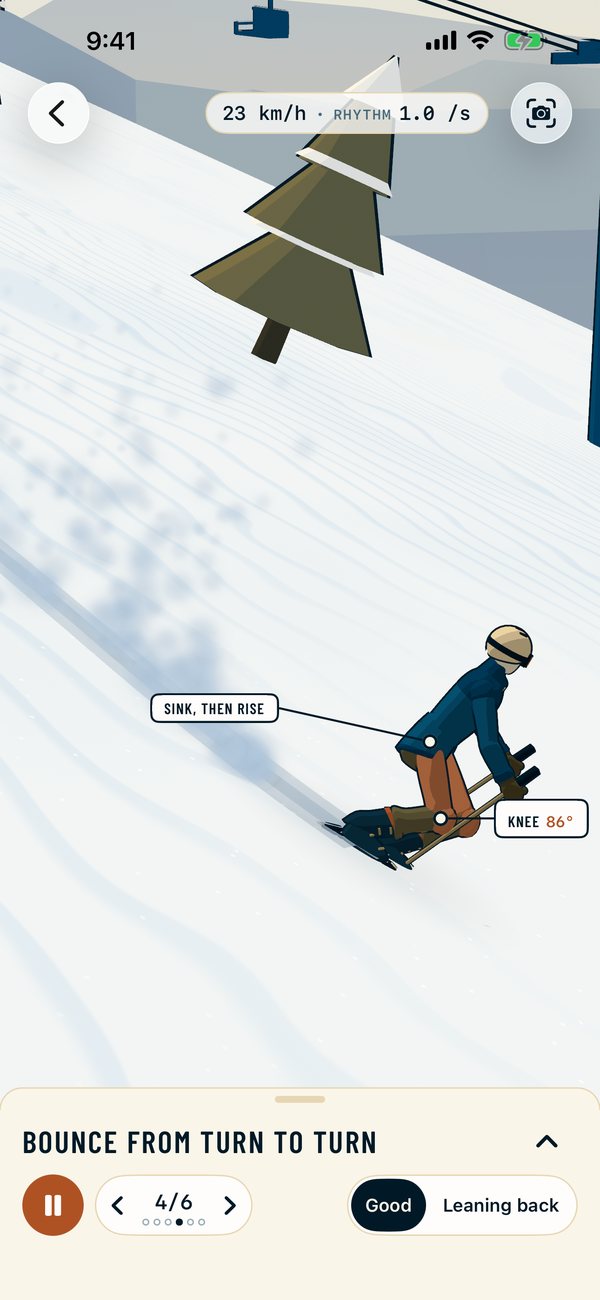
In powder, stay centred over your skis, spread your weight evenly across both, keep your feet a little closer than on the piste, and use a small up-and-down bounce to link the turns. In trees, look at the gaps rather than the trunks, keep your turns short and in control, take your hands out of the pole straps, and stay in sight of a partner.
Off the groomed runs, avalanches and tree wells can kill. Check the avalanche forecast, never go alone, carry a transceiver, shovel and probe and know how to use them, and take avalanche training. Ski your first off-piste days with an instructor or a mountain guide.
I built Slalo, an iPhone app that teaches skiing on an animated 3D skier, and its last two lessons are powder and trees. This post covers the technique, then the safety, with a source for each point.
Should you lean back in powder?
No. Ski Magazine’s powder balance guide calls leaning back a myth that “just burns out your quads and makes it even more difficult to steer”. Professional skier Wendy Fischer’s advice there is to stay over the centre of your skis. The guide’s other tips: narrow your stance, spread your weight more evenly over both skis so the outside ski doesn’t dive, and flex your ankles more than your knees.
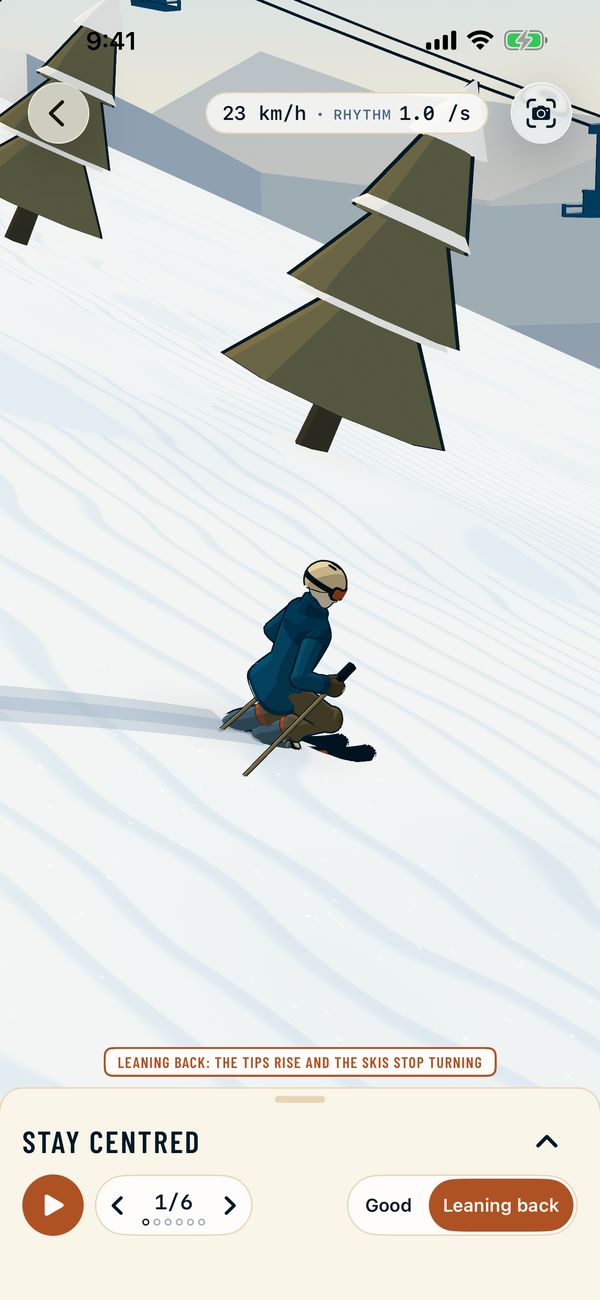
Warren Smith’s freeride stance guide on J2Ski says a closer stance helps the skis move together in deep snow, but people who clamp their feet together lose their range of movement. He suggests practising the closer stance on easy terrain first.
How do you turn in deep snow?
With a bounce, and enough speed to float. Canadian Mountain Holidays guides give intermediate skiers three tips in a Ski Magazine piece. Weight both feet equally, because a weighted ski dives. Make small vertical movements, sinking into a crouch and standing up with a slight bounce. And remember that speed helps you stay on top of the snow, since going too slowly leaves you weighting one ski and losing balance.
Carv’s powder mistakes guide describes the bounce as a springboard: the up-and-down motion carries you into each turn and sets the rhythm.
How do you ski trees?
Look at the spaces, not the trees. That line comes from the prevention list on the tree well safety site deepsnowsafety.org, and Last Frontier Heliskiing’s tree tips give the reason: looking at the trees as you pass them makes your body want to ski into them.
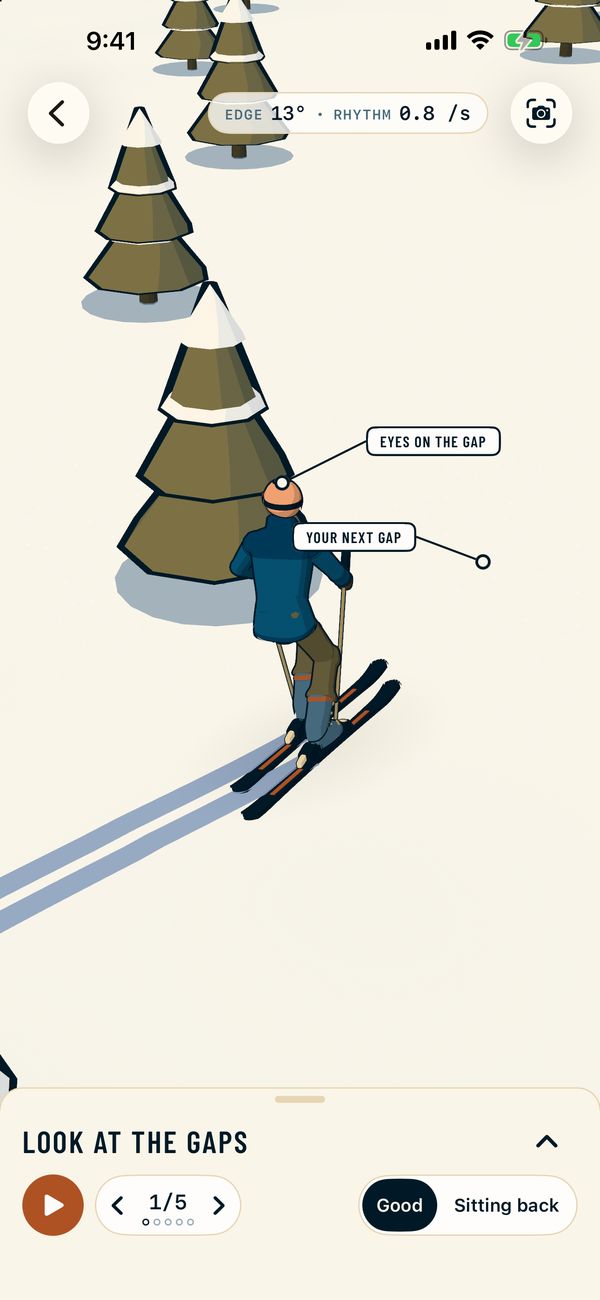
Keep turns short and controlled. Ski Magazine’s pivot slip was written for tight trees. It lets you shed speed and change direction in a narrow space without stopping between turns.
Take your hands out of the pole straps. Deepsnowsafety.org lists it, and Last Frontier adds a helmet, to lower the chance of a dislocated shoulder or skull fracture.
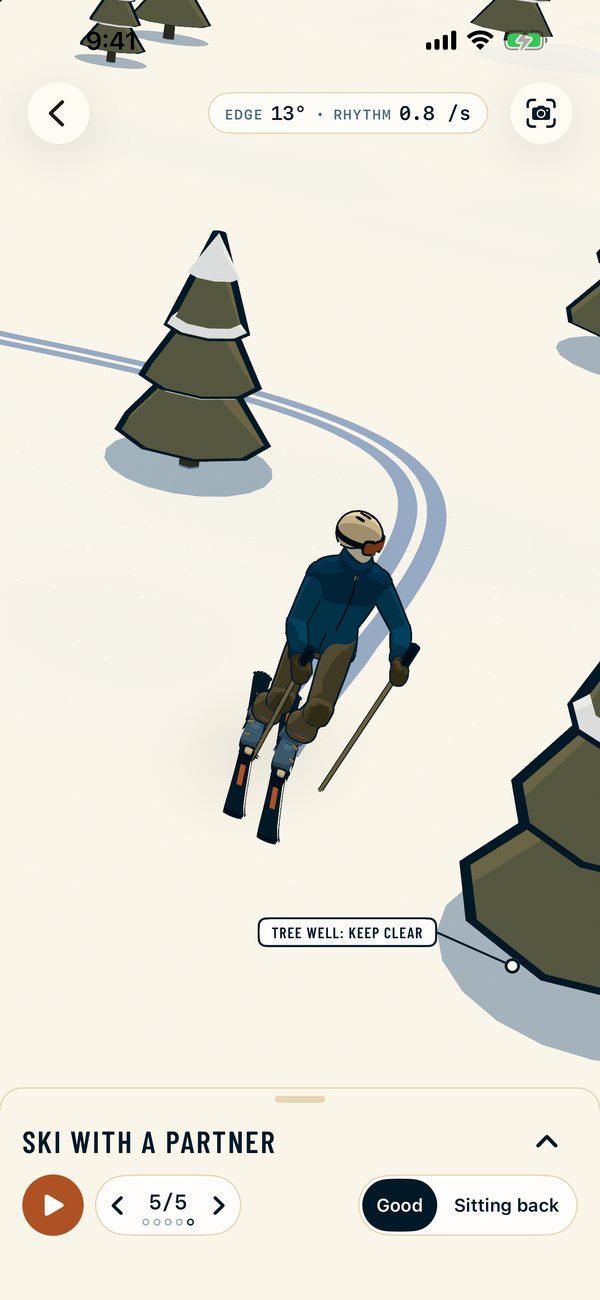
What is a tree well, and why is it dangerous?
A tree well is a hollow round the base of a tree, often hidden by low branches and filled with loose snow and air. You can’t tell by looking which trees have a dangerous well, so the site’s advice is to treat them all as dangerous.
Falling in, usually head first, can trap you under the snow. In deepsnowsafety.org’s words, 90% of people in tree well research experiments could not rescue themselves. That’s why tree skiing is a partner activity. Ski with someone, keep each other in sight at all times, and give tree wells a wide berth. Last Frontier notes that heli and cat guides use a call system when guests are out of sight, and its advice if you lose sight of your partner is simple: don’t just keep skiing.
How do you stay safe from avalanches off-piste?
Do all five of these, every time.
Check the forecast
Avalanche bulletins are written for the terrain you’re heading into. SLF, the Swiss avalanche service, says its bulletin only reports on unsecured terrain, away from secured ski runs. Use the official service for where you are: SLF in Switzerland, avalanche.org in the US, Avalanche Canada, or the Scottish Avalanche Information Service in Scotland. The danger scale isn’t linear. On SLF’s danger level page, level 3 of 5, Considerable, is forecast for around 30% of the winter and accounts for around 50% of avalanche deaths. At that level SLF advises inexperienced people to stay on open ski runs. I wrote a separate guide on how to read an avalanche bulletin. And as avalanche.org’s tutorial puts it, the forecast is only a starting point.
Know the terrain
According to avalanche.org, avalanches are possible on any slope steeper than 30° and happen most often on slopes of 35° to 50°. It lists trees among the terrain traps that make being caught worse.
Never go alone
Avalanche.org’s solo travel entry says travelling alone greatly increases your vulnerability, and that self-rescue is often impossible once you’re buried. Its travel advice is blunt: “You can’t dig yourself out of an avalanche.” Expose only one person at a time to a slope that could slide.
Carry a transceiver, shovel and probe
Avalanche.org says to always carry all three and know how to use them. The transceiver gets you close, the probe finds the exact spot, and the shovel digs. Avalanche Canada’s gear page adds that everyone in the group needs all three: “One or two of the three isn’t good enough.”
Get trained, and practise
Avalanche Canada’s advice is to take a training course and practise, because you can waste a lot of time with gear you can’t use quickly. Avalanche.org’s tutorial points to course providers. Spend your first days off-piste with an instructor or a mountain guide.
How does Slalo teach powder and trees?
The Off-piste section of Slalo has two lessons. Powder teaches you to stay centred with your weight even on both skis and bounce from one turn into the next. Trees, set in a glade, teaches you to look at the gaps and keep your turns short and in control. You can switch either one to its common mistake to compare.
Slalo’s safety note says the same as this post: never go alone, check the avalanche forecast, carry a transceiver, shovel and probe you know how to use, and stay clear of tree wells. Slalo teaches technique and doesn’t replace an instructor.
More on Slalo. The short turns you need in trees are in how to carve on skis.